
Squirrel Removal
🚨 24/7 Rapid Emergency Wildlife Removal • Rockford, IL
Squirrel Removal in Rockford, IL
Squirrels cause severe structural & electrical fire risks. We provide humane removal, complete attic cleanup, and permanent chew-proof exclusion.
- ⚡ Same-Day Emergency Response in Rockford & Winnebago County
- 🛡️ 100% Humane Removal & Permanent Entry-Point Exclusion Guarantee
- ⭐ Licensed, Insured & Local Illinois Wildlife Control Specialists
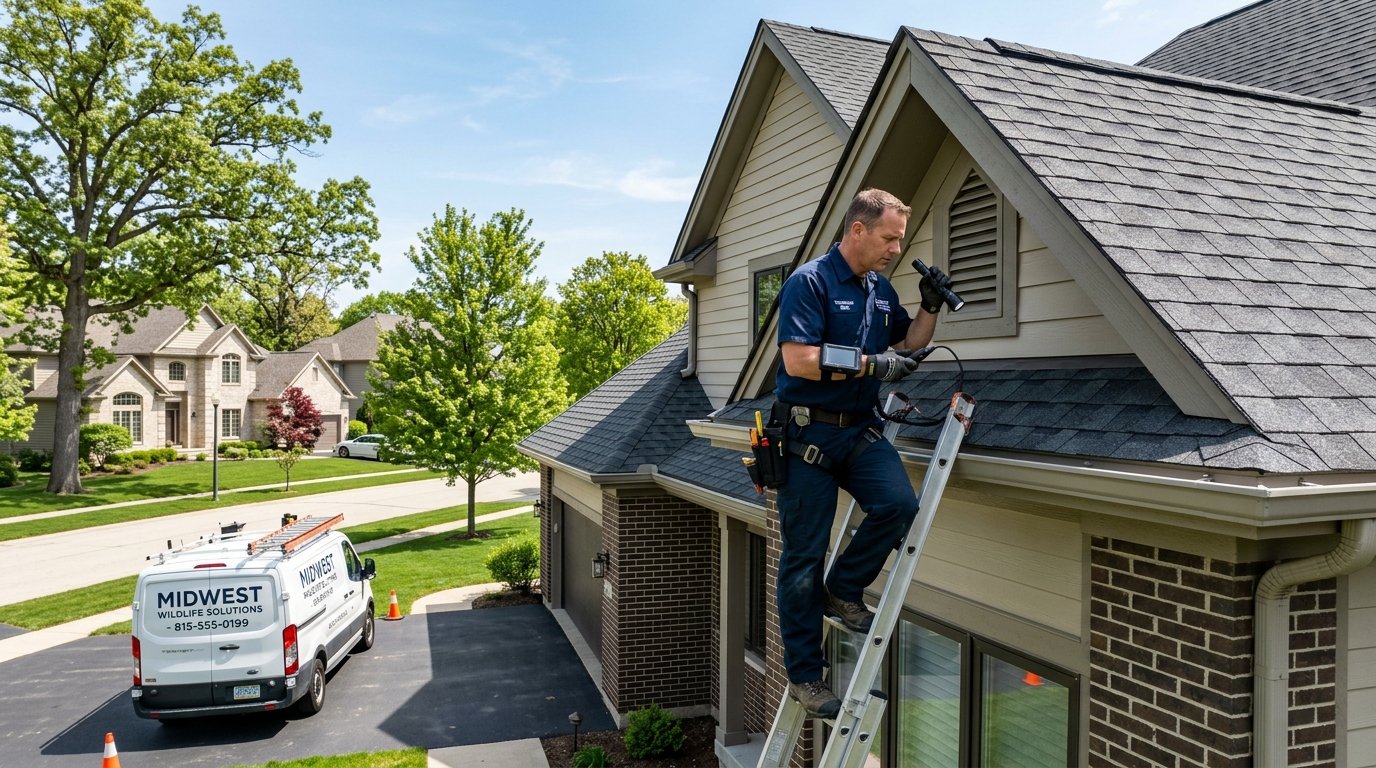
Squirrels in Rockford Attics and Walls
Gray squirrels and fox squirrels are both common in Rockford neighborhoods. While they spend most of their time outdoors, they actively seek enclosed spaces to nest — particularly in fall as temperatures drop, and again in late winter when females look for secure birthing sites. An attic is ideal from a squirrel’s perspective: dry, protected, and full of nesting material.
The real concern with squirrels in the attic is not their presence itself, but what they do while there. Squirrels’ teeth never stop growing, which means they gnaw constantly — on wood, pipes, and most critically, on electrical wiring. Chewed wiring in an attic space is a genuine fire risk. It’s also a problem that is often invisible until it becomes serious.
Unlike raccoons, squirrels are diurnal — you’ll hear them during the day, especially in early morning and mid-afternoon. This timing is actually helpful for identifying the problem early, since the sounds occur when people are awake and active.
Signs of Squirrels in the Attic or Walls
- Scratching or scurrying sounds during the day — especially morning and late afternoon
- Acorn or nut caches found in insulation or corners of the attic
- Visible gnaw marks on fascia, soffits, or trim boards near the roofline
- Round entry holes — squirrels gnaw openings to precise sizes for repeated use
- Squirrel activity on the roof, particularly near the fascia or vent areas
- Nesting material (leaves, insulation fibers, chewed wood) in the attic
- Sounds inside wall cavities, especially near the top of interior walls
- Electrical issues or flickering lights with no obvious cause
How Squirrels Enter Buildings
Squirrels are agile climbers that use trees, downspouts, and rough siding to reach rooflines. Once there, they test every surface for weakness. Common entry points in Rockford homes include gaps where rooflines meet at corners or valleys, deteriorated wood at the soffit-fascia junction, plastic attic vents that squirrels can chew through, and small openings where utility lines enter the structure.
A squirrel can enter through an opening as small as 1.5 inches in diameter. They will enlarge a gap that is close to that size. Homes with older wood fascia, any damaged or missing soffit sections, or ornamental plastic vents are particularly vulnerable.
Tree branches that touch or overhang the roof are the primary access route for most squirrels. Trimming branches back significantly reduces the likelihood of squirrel entry — but existing openings still need to be addressed.
Why Squirrel Problems Shouldn’t Wait
- Wiring damage — gnawed insulation on electrical wires is a fire hazard that is often hidden in wall or attic spaces
- Insulation damage — squirrels compress and rearrange insulation for nesting, reducing its thermal performance
- Persistent re-entry — squirrels know exactly where they’ve entered before and will attempt repeatedly after removal if the hole isn’t sealed
- Secondary entries — a squirrel removed from one entry point will often find a secondary weakness in the same structure within days
- Litter cycles — gray squirrels breed twice a year (late winter and summer), meaning populations can grow quickly
Squirrel Removal and Exclusion
Squirrel removal typically involves a combination of live trapping and exclusion. One-way exclusion devices are especially effective for squirrels — they allow the animal to exit through the opening but not return. Once the one-way device has been in place long enough to confirm all animals have exited, the entry point is permanently sealed.
All secondary entry points identified during the inspection are sealed at the same time. Sealing only the primary entry point while leaving secondary gaps is a common mistake — squirrels quickly find and use alternatives.
The most critical step after removal is the quality of the exclusion. Thin wood, foam, or standard caulk are not sufficient for squirrel exclusion. Hardware cloth, galvanized steel mesh, and metal flashing are the materials that actually hold up. See our Wildlife Exclusion page for more detail.
📍 Serving Rockford, Illinois — Contact us for help with wildlife on your property.
Squirrel Removal FAQ
Hearing Squirrels in the Attic?
The sooner the entry point is addressed, the less wiring and insulation damage occurs. Call to discuss your situation.