
Attic Wildlife Removal
🚨 24/7 Rapid Emergency Wildlife Removal • Rockford, IL
Attic Wildlife Removal in Rockford, IL
Noises, scratching, or animal odors in your attic? We deliver complete removal, sanitization, insulation restoration, and lifetime entry exclusion.
- ⚡ Same-Day Emergency Response in Rockford & Winnebago County
- 🛡️ 100% Humane Removal & Permanent Entry-Point Exclusion Guarantee
- ⭐ Licensed, Insured & Local Illinois Wildlife Control Specialists
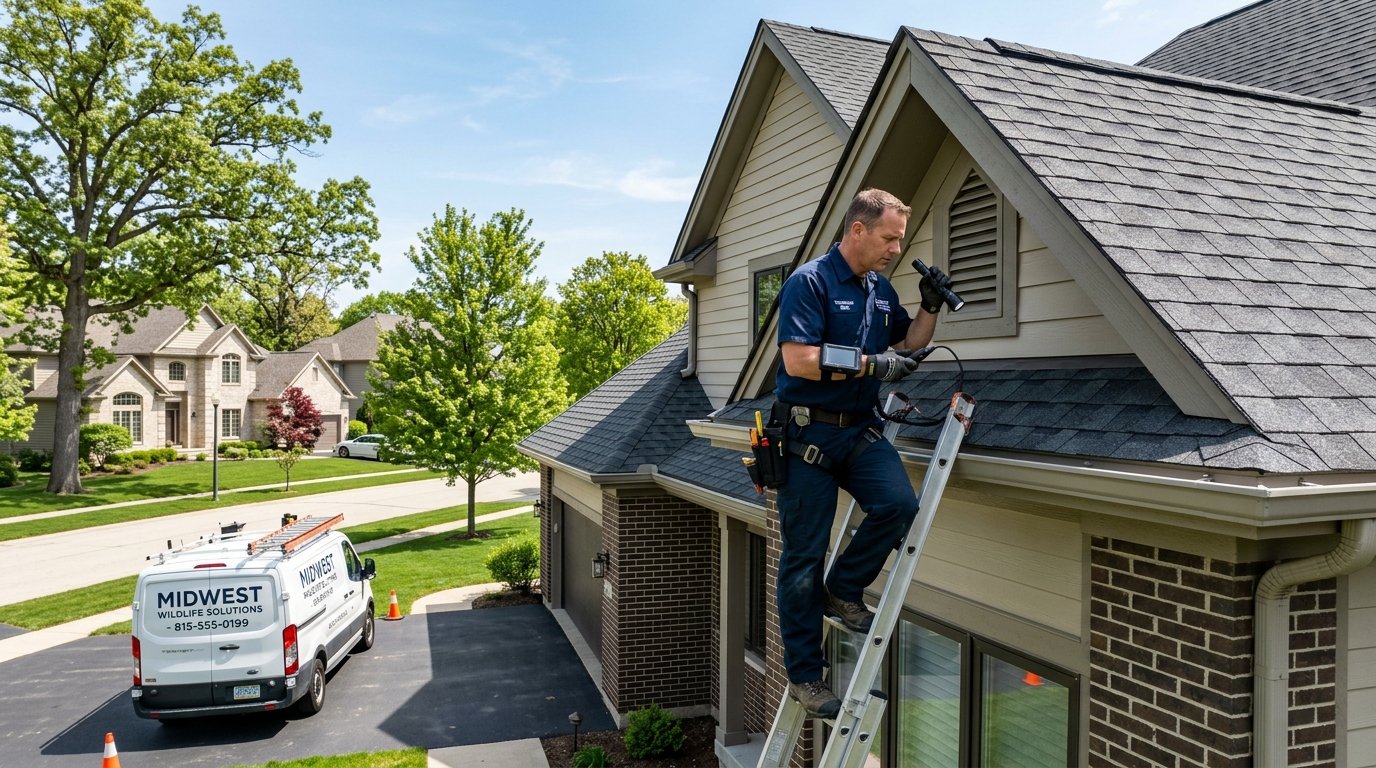
Animals in the Attic: A Common Rockford Problem
The attic is the most common location for wildlife intrusions in northern Illinois homes. It provides warmth, dryness, and protection from predators — qualities that raccoons, squirrels, bats, birds, and other animals actively seek out. Most attic wildlife problems go undetected for weeks or months before the homeowner notices sounds, odors, or visible damage.
The species in the attic determines the nature of the problem. Raccoons cause rapid, significant damage. Squirrels are persistent and focused on gnawing. Bats are quiet and may go undetected for years while the colony grows. Birds create localized messes near their nesting sites. Each requires a different approach.
Attic wildlife problems also frequently escalate: an animal that entered through a small gap in October will have caused considerably more damage by February. An inspection as soon as signs are noticed is the most effective way to address the situation before it worsens.
Wildlife Commonly Found in Rockford Attics
- Raccoons — heavy thumping at night, large nesting areas, spring litters
- Gray and Fox Squirrels — daytime activity, gnawing sounds, wiring damage
- Big Brown and Little Brown Bats — quiet roosting, guano accumulation
- European Starlings and House Sparrows — nesting in soffits and vents
- Opossums — occasional attic entry through damaged soffit
- Flying squirrels — nocturnal, high-pitched sounds, small entry points
- Mice — not typically an attic wildlife control issue (more of a pest control issue)
Signs of Wildlife Activity in the Attic
- Sounds — scratching, thumping, dragging, or running. The timing (day vs. night) helps identify the species.
- Odors — musty ammonia smell from animal waste, or a strong organic odor from nesting material
- Exterior damage — displaced soffit panels, torn fascia, visible entry holes at the roofline
- Staining — grease marks or discoloration around entry points from animal fur
- Evidence in the attic — nesting material, droppings, insulation disturbance
- Guano — small, elongated pellets that crumble to powder when dry (bats)
- Animal sightings — seeing an animal entering or exiting the roofline at dusk or dawn
- Pest increase — secondary parasites like mites or fleas can indicate wildlife nesting above
Damage Concerns in Attic Wildlife Situations
- Insulation flattened, shredded, or contaminated — loses thermal performance
- Animal waste saturating insulation and structural materials — creates persistent odor
- Gnawed wiring — especially concerning with squirrels; creates fire risk
- Damaged ductwork — animals chew through or nest in flexible HVAC ducts
- Structural entry holes that enlarge over time and allow water intrusion
- Secondary pest infestation following wildlife presence
- Wood rot at entry points due to continued animal traffic combined with weather exposure
The Attic Wildlife Removal Process
A complete attic wildlife removal involves four distinct phases. Skipping any one of them typically results in the problem recurring.
01
Inspection
Full inspection of the attic interior and building exterior. We identify the species, locate all entry points, assess the extent of nesting and contamination, and document conditions before any work begins.
02
Removal
The animal — including any young, nesting material, and accessible waste — is removed. The method depends on the species: live trapping, one-way exclusion devices, or direct removal.
03
Exclusion
All entry points identified during inspection are sealed permanently using appropriate materials. One-way devices used during removal are replaced with solid sealing once the attic is confirmed empty.
04
Remediation Guidance
We document the damage found and advise on necessary follow-up work: insulation replacement, wiring inspection, structural repairs, and cleanup of contaminated areas.
📍 Serving Rockford, Illinois — Contact us for help with wildlife on your property.
Attic Wildlife Removal FAQ
How can I tell what kind of animal is in my attic?
Timing is the most reliable initial indicator. Sounds during the day — especially morning and afternoon — suggest squirrels. Heavy thumping and movement at night is typically raccoons. Quiet, occasional rustling in warm weather is often bats. Chattering from a fixed location can be birds in a vent. A professional inspection will confirm the species and provide the information needed to address the situation correctly.
Is it safe to go into the attic if there’s an animal in there?
It depends on the species and situation. Going into an attic where raccoons are nesting — especially a mother with young — is not advisable without experience. Bats should not be handled without appropriate precautions. Squirrels will typically scatter from a person entering the attic, but may have created conditions (contaminated insulation, damaged wiring) that require careful handling. For most situations, letting a professional do the initial inspection and removal is the safest approach.
Does homeowners insurance cover attic wildlife damage?
Coverage varies by policy. Some homeowners insurance policies cover damage from certain wildlife — particularly if it can be characterized as sudden and accidental damage. Wildlife contamination and gradual damage are less consistently covered. Contact your insurance provider to understand your specific policy. Document the damage thoroughly regardless of coverage status.
Do I need to replace the insulation after wildlife removal?
Not always immediately, and not in every case. If contamination is limited and confined to a small area, targeted removal of the affected insulation may be sufficient. Extensive contamination — particularly from a large raccoon colony or long-established bat roost — typically warrants a more complete attic remediation. We assess this as part of the inspection and provide honest guidance on what is actually necessary versus what might be upsold unnecessarily.
Related Services
Sounds or Odors Coming From the Attic?
An inspection is the right first step — don’t wait for the problem to get bigger. Call ABP Wildlife Expert.