
Bird Removal
🚨 24/7 Rapid Emergency Wildlife Removal • Rockford, IL
Bird Removal in Rockford, IL
Nuisance birds nesting in vents, eaves, and chimneys? Professional humane removal, nest sanitization, and permanent vent barrier installation.
- ⚡ Same-Day Emergency Response in Rockford & Winnebago County
- 🛡️ 100% Humane Removal & Permanent Entry-Point Exclusion Guarantee
- ⭐ Licensed, Insured & Local Illinois Wildlife Control Specialists
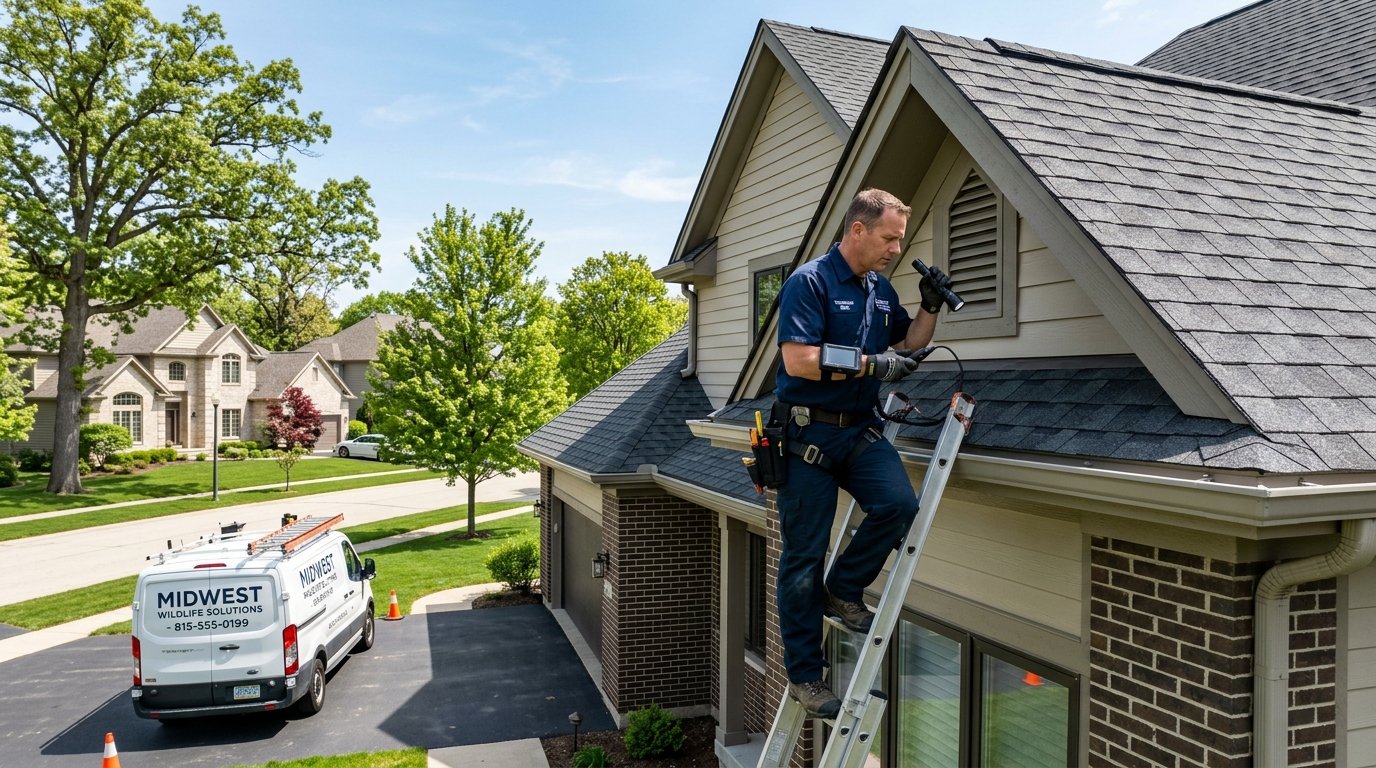
Nuisance Bird Problems in Rockford Buildings
Several bird species regularly create problems in and around Rockford buildings. European Starlings and House Sparrows are the most aggressive nesters — both are invasive species not protected under the Migratory Bird Treaty Act, meaning nests and eggs can be legally removed. Rock Pigeons (common city pigeons) also cause problems in larger buildings and commercial facilities. Native species like woodpeckers and chimney swifts are federally protected and require different approaches.
The most common bird problem in residential properties is birds nesting inside dryer vents, range hood exhaust vents, bathroom exhaust vents, and other building penetrations. Starlings and sparrows pack these vents tightly with nesting material — grass, twigs, feathers, and debris — creating a complete blockage. In dryer vents, this creates a genuine fire hazard from accumulated lint combined with heat.
Under eaves, in open soffits, and in gaps at the building’s roofline, starlings and sparrows establish large, messy nests. The acidic nature of bird droppings damages paint, wood, and metal surfaces over time.
Signs of Problem Birds Around Your Property
- Constant chirping or chattering from inside a vent or wall
- Reduced airflow through dryer or exhaust vents
- Visible nest material poking out of vent openings
- Bird droppings accumulating on the building exterior below nesting sites
- Birds entering and exiting building gaps near the roofline repeatedly
- Woodpecker holes in wood siding, cedar shake, or fascia boards
- Starling flocks roosting on the building causing noise and droppings
- Chimney swift colonies — a distinctive chittering sound from active chimneys
Why Bird Problems Require Prompt Attention
A dryer vent blocked with bird nesting material is one of the more urgent situations because of the fire risk. Lint accumulation in a partially blocked vent combined with heat from a working dryer is a documented cause of house fires. If you notice your dryer taking longer than normal to complete cycles, check for vent blockage.
Bird droppings are chemically corrosive and will damage painted surfaces, wood decking, metal railings, and roof materials over time with repeated exposure. Large roost sites in commercial settings can produce hundreds of pounds of droppings annually.
Nests left in vents or wall spaces also provide habitat for bird mites and other parasites that can migrate into the living space once the birds leave.
Removal and Exclusion Approaches
- Removal of nesting material from blocked vents — requires complete clearance of the vent pipe
- Installation of proper vent covers with mesh guards that prevent bird entry
- Exclusion of open eave and soffit gaps where birds are nesting
- Physical exclusion of roost sites using mesh, netting, or physical barriers
- Spike strips and ledge exclusion systems for persistent roost sites on ledges and sills
- Woodpecker deterrents including visual repellents and physical barriers at damaged areas
- Repair of damaged areas birds have entered or created
📍 Serving Rockford, Illinois — Contact us for help with wildlife on your property.
Bird Removal FAQ
Is it legal to remove bird nests?
It depends on the species. House Sparrows and European Starlings are invasive, non-native species not protected by the Migratory Bird Treaty Act. Their nests, eggs, and birds can be legally removed at any time. Most native species — including robins, wrens, swallows, and chimney swifts — are federally protected. Nests with active eggs from protected species cannot be disturbed until the nesting cycle is complete.
How urgent is a blocked dryer vent?
A fully blocked dryer vent is urgent and should be addressed as soon as possible. A partially blocked vent with nesting material increases drying time and represents a growing fire risk as the blockage becomes more complete. If your dryer is taking significantly longer than normal, this is worth investigating immediately.
A woodpecker is damaging my house siding. What can be done?
Woodpeckers are a protected species, so they cannot be harmed. Visual deterrents — reflective tape, predator decoys, and hanging objects that move in the wind — are often effective when used promptly. Physical barriers (hardware cloth or netting) over the damaged area can prevent further damage. Addressing any underlying insect infestation in the wood may reduce the woodpecker’s interest.
Can bird problems recur after removal?
Birds are creatures of habit and will return to successful nesting sites if the access point is not addressed. Removing nesting material without installing a proper vent cover or gap screen means new birds will attempt to use the same location in subsequent nesting seasons. Exclusion is the part of the process that prevents recurrence.
Related Services
Birds Nesting in Your Vents or Building?
Address the problem before the nesting season is in full swing. Call ABP Wildlife Expert.