How to Get Rid of Raccoons in Your Attic: A Complete Guide for Rockford, IL Homeowners
If you’re hearing thumping, scratching, or what sounds like a wrestling match above your ceiling at night, there’s a good chance you have raccoons in your attic. It’s one of the most common wildlife problems for homeowners in Rockford and across Winnebago County — and it’s not something to ignore.
Raccoons are clever, strong, and surprisingly destructive once they move in. The good news: with the right approach, they can be removed humanely and kept out for good. Here’s everything you need to know.
Signs You Have Raccoons in Your Attic
Raccoons are nocturnal, so most of the evidence shows up overnight or in the morning:
- Loud noises at night — thumping, walking, or rustling between roughly 10 PM and 4 AM. Raccoons are heavy (10–30 lbs), so they sound much louder than mice or squirrels.
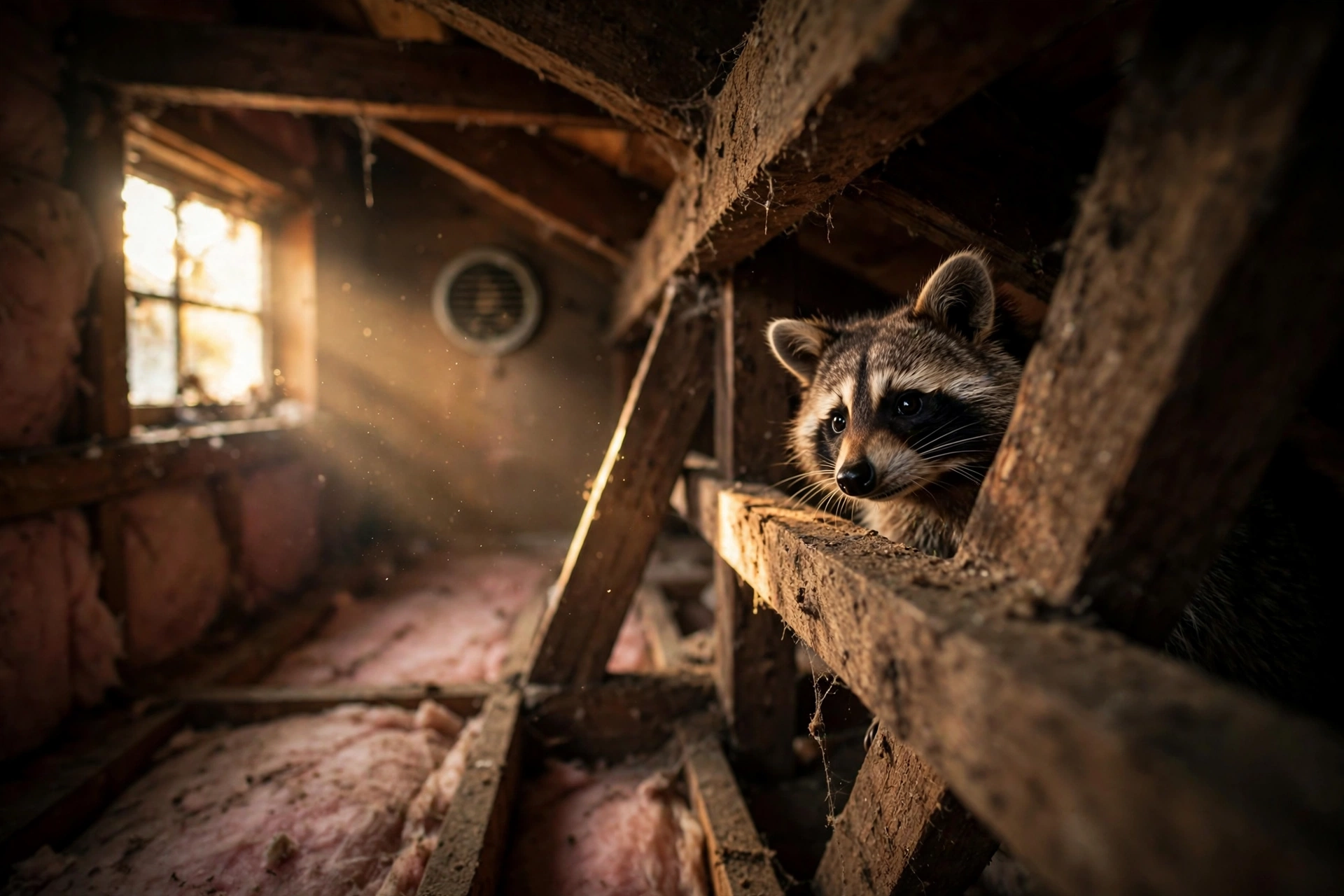
- Torn-up insulation — raccoons flatten and shred insulation to build nests, destroying its effectiveness.
- Droppings and urine stains — often piled in one area (a “latrine”). Raccoon feces can carry roundworm, so don’t handle it with bare hands.
- Damaged vents, soffits, or shingles — raccoons can tear through surprisingly tough materials to get inside.
- A strong, musky odor — especially noticeable on warm days.
- Outside clues — overturned trash cans, muddy paw prints on downspouts, or damage near the roofline.
If two or more of these sound familiar, it’s time for a professional inspection.
Why Raccoons Love Attics in Northern Illinois
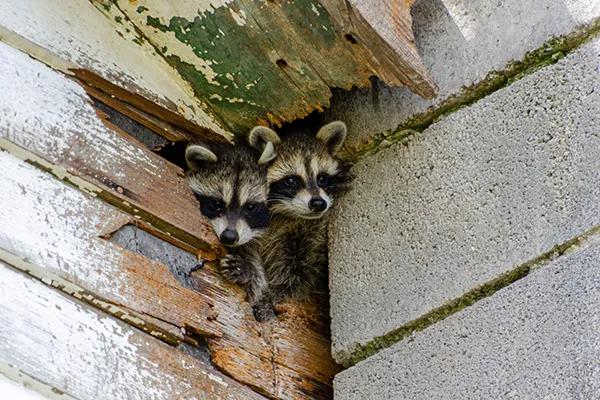
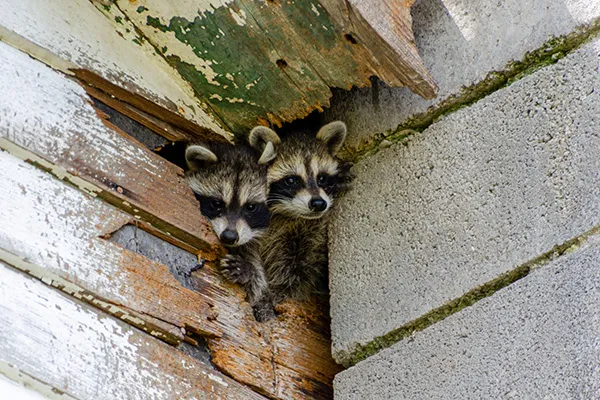
To a raccoon, your attic is a perfect den: warm, dry, quiet during the day, and safe from predators. In the Rockford area, raccoons most often move into attics in late winter and spring, when females are looking for a safe place to raise their kits (babies). A mother raccoon with babies is also the most defensive — and the trickiest situation to handle without professional help.
Once raccoons find a comfortable attic, they don’t leave on their own. And every season they stay, the damage gets worse.
The Dangers of Ignoring Raccoons
It’s tempting to hope they’ll just move along. They won’t — and waiting makes everything worse:
- Structural damage — raccoons tear insulation, chew wiring (a genuine fire hazard), damage ductwork, and stain ceilings with urine.
- Health risks — raccoons can carry rabies, raccoon roundworm, and leptospirosis. Their droppings and nesting areas contaminate the attic.
- Bigger bills later — a simple removal today can become a full attic restoration job if the damage spreads.
What NOT to Do
The internet is full of bad advice about raccoon removal. Here’s what to avoid:
- Mothballs, ammonia, and strobe lights — these “repellents” rarely work on a determined raccoon, especially a mother with babies.
- Sealing the entry hole while animals are inside — this traps them (or their babies) in your attic, leading to dead animals, terrible odors, and even more damage as they chew their way out.
- DIY trapping without knowing the law — Illinois regulates the trapping and relocation of raccoons through the Department of Natural Resources. Trapping without the right knowledge can be illegal, and relocated raccoons often don’t survive.
- Cornering or handling a raccoon yourself — a frightened raccoon, especially a mother, can bite and scratch. Rabies exposure is a real risk.
How Professional Raccoon Removal Works
A proper professional job isn’t just “catch and release.” Here’s the process we follow at ABP Wildlife Expert:
- Full inspection — we find every entry point, assess the damage, and check for babies.
- Humane removal — using one-way exclusion doors and live traps, so raccoons leave safely and mothers can retrieve their young.
- Exclusion — every entry point is sealed with animal-proof materials so nothing gets back in. Removal without exclusion is just a temporary fix.
- Cleanup and decontamination — droppings, nesting material, and contaminated insulation are removed and the area is sanitized.
- Attic restoration — damaged insulation is replaced and the attic is returned to a clean, energy-efficient state.
How to Keep Raccoons Away for Good
After removal, a few habits make a big difference:
- Secure trash cans with locking lids and don’t leave pet food outside overnight.
- Trim tree branches at least 6–10 feet away from your roof — they’re raccoon highways.
- Install a chimney cap and repair any damaged soffits, fascia, or roof vents.
- Check your attic a couple of times a year for new entry points, especially after storms.
When to Call a Professional
Call sooner rather than later if you hear persistent nighttime noises, see entry damage, or find droppings. And call immediately if there’s any chance of babies in the attic (spring is peak season) — that situation needs experienced hands.
ABP Wildlife Expert serves Rockford, Loves Park, Machesney Park, Belvidere, and surrounding Winnebago County communities with 24/7 emergency wildlife removal. We’re licensed and insured, and every job includes humane removal plus permanent exclusion.
Call (779) 323-0324 — day or night — for a full property inspection.
Frequently Asked Questions
How do I know if it’s raccoons and not squirrels?
Raccoons are nocturnal and heavy — you’ll hear loud thumping and walking at night. Squirrels are active during the day and make lighter, quicker scratching sounds, usually at dawn and dusk.
Can I just wait for raccoons to leave on their own?
No. Once raccoons settle into an attic, they stay — and the damage compounds every week. Females with babies are especially committed to the den.
Is it legal to trap raccoons myself in Illinois?
Illinois regulates raccoon trapping and relocation through the IDNR. In most cases, handling it yourself risks breaking the law or creating a worse problem. A licensed professional knows the legal, humane process.
How long does professional raccoon removal take?
Most jobs are completed within a few days to a week, depending on whether babies are present and how many entry points need sealing. Exclusion and cleanup add a little more time but prevent the problem from returning.
Will the raccoons come back after removal?
Not if the job is done right. Permanent exclusion — sealing every entry point with animal-proof materials — is what keeps them out for good. That’s why exclusion is part of every job we do.