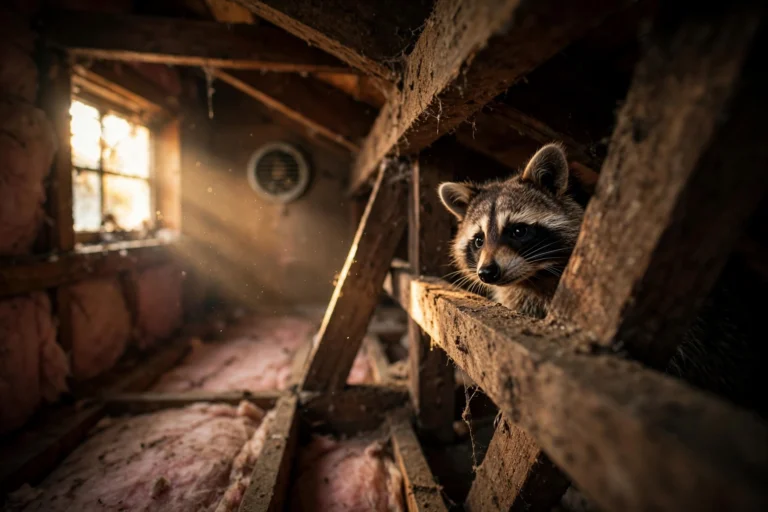
7 Signs of Raccoons in Your Attic
Hearing strange noises overhead at night? You’re not imagining things — and you’re definitely not alone. Raccoons in the attic are one of the most common wildlife problems for homeowners in Rockford and across Winnebago County. The tricky part: most people don’t realize what’s happening until the damage is extensive.
Raccoons are secretive houseguests at first. But they always leave evidence. Learn the signs of raccoons in your attic early, and you can stop a small problem before it becomes torn insulation, chewed wiring, and contaminated ductwork.
Here are the 7 telltale signs — what each one means, and what to do next.
1. Loud Thumping and Scratching at Night
This is the number-one sign. Raccoons are nocturnal, so they head out to forage after dark and return before dawn — meaning you’ll hear the most activity between roughly 10 PM and 4 AM.
Listen for heavy thumping, walking, or rustling — almost like someone moving around upstairs. Raccoons typically weigh 10–30 pounds, so they sound much louder than mice. Squirrels, by contrast, are active during the day and make lighter, quicker scratching, usually at dawn and dusk.
What it means: Nightly heavy noises almost always mean a larger animal — most often raccoons. If you hear it consistently in the same spot, they’ve likely set up a den.
2. Droppings and Urine Stains
Raccoons tend to use the same spot as a bathroom, creating what professionals call a “latrine” — a concentrated pile of droppings, often with dark urine stains on the insulation or the ceiling below.
Raccoon droppings are blunt-ended, about the size of a small dog’s, and often contain visible bits of berries or seeds. Over time the stains can bleed through drywall, showing up as yellowish-brown patches on the ceiling of the rooms below.
What it means: A latrine means raccoons aren’t just passing through — they’re living there. Raccoon feces can carry roundworm, so never handle droppings with bare hands.
3. Torn, Flattened Insulation and Damaged Ductwork
Raccoons flatten, compress, and shred insulation to build nests, destroying its ability to insulate your home. You’ll see trails, tunnels, and matted-down areas — sometimes with insulation dragged into corners to form a nest. They also tear into flexible ductwork, rip vapor barriers, and chew wood and wiring along the way.
What it means: Damaged insulation isn’t just an energy-bill problem — it’s confirmation of an active den. The longer raccoons stay, the worse (and more expensive) the damage gets.
4. Strong, Musky Odors
If your upstairs or attic has developed a persistent musky, unpleasant smell — especially noticeable on warm days — raccoons are a prime suspect. The odor comes from urine, droppings, body oils, and nesting material building up over time.
What it means: Odor usually means the problem has been going on for a while. A brand-new visitor doesn’t smell; an established den does.
5. Damaged Soffits, Vents, and Shingles
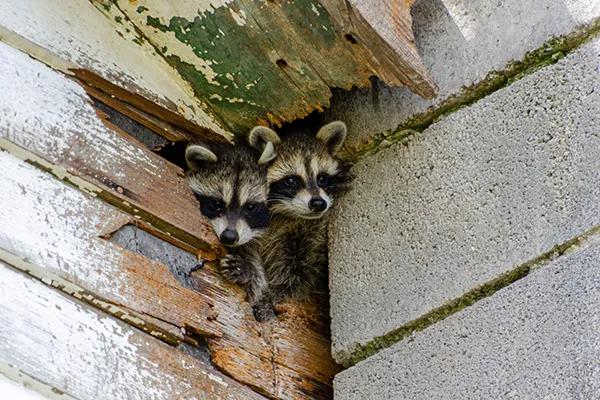
Walk around your house and look up at the roofline. Raccoons are remarkably strong — they can peel back soffits, bend lightweight vent covers, tear shingles, and enlarge small gaps into full-sized entry holes. Look for bent metal, claw marks, broken vent slats, or shingles that look pried up near eaves and dormers.
What it means: Exterior damage shows exactly how they’re getting in — and it’s your roadmap for the exclusion work that must happen after removal.
6. Tracks and Greasy Rub Marks Around Entry Holes
Raccoons use the same entry hole night after night, and their oily fur leaves dark, greasy rub marks around the opening. In a dusty attic you may also spot their distinctive hand-like paw prints — five long toes that look almost like tiny human hands. Check beams and rafters too: rub marks there reveal a regular travel route.
What it means: Rub marks and tracks confirm an active, repeated entry — not a one-time visitor.
7. Nesting Debris Scattered Around
Raccoons don’t just sleep in your attic — they renovate it. Look for shredded insulation piled into nest shapes, bits of leaves, twigs, or trash dragged inside, and debris scattered well beyond the nest. You might even find food scraps or stolen pet food stashed in corners.
What it means: Nesting behavior means they’re settled in — and in spring, it can also mean babies. A mother raccoon with kits is one situation you should never handle yourself.
What to Do Next
Spotted one or more of these signs? Here’s the smart order of operations:
- Don’t ignore it. Raccoons never leave on their own, and every week adds damage.
- Don’t seal the entry hole yourself. Sealing animals inside — especially babies in spring — leads to dead animals, terrible odors, and raccoons chewing new holes to escape.
- Don’t try DIY trapping. Illinois regulates raccoon trapping and relocation, and a trapped mother separated from her kits creates a bigger problem.
- Get a professional inspection. A trained technician finds every entry point, checks for babies, and maps the damage. Learn more about our wildlife inspection process.
The real fix is professional raccoon removal followed by permanent exclusion — sealing every entry point with animal-proof materials so they can’t return.
Raccoons or Something Else? A Quick Comparison
- Raccoons: loud, heavy noises at night (10 PM–4 AM); large droppings in piles; big entry holes.
- Squirrels: lighter, faster scratching during the day, especially morning and evening; smaller droppings scattered around.
- Mice: faint scratching and squeaking in walls, mostly at night; tiny rice-shaped droppings.
- Bats: high-pitched chirping at dusk; small dark droppings (guano) near entry points.
When in doubt, a professional inspection settles it in one visit.
Call Before the Damage Spreads
Noticing any of these 7 signs? ABP Wildlife Expert serves Rockford, Loves Park, Machesney Park, Belvidere, and surrounding Winnebago County communities with 24/7 emergency wildlife removal — humane removal, permanent exclusion, and full attic restoration when needed.
Call (779) 323-0324 — day or night — for a full property inspection.
Frequently Asked Questions
How can I tell if the noises are raccoons and not squirrels?
It’s all about timing and weight. Raccoons are nocturnal and heavy — loud thumping between 10 PM and 4 AM. Squirrels are daytime animals that make lighter, quicker scratching, mostly at dawn and dusk. Loud in the middle of the night? Think raccoons.
Are raccoon droppings in the attic dangerous?
They can be. Raccoon feces may carry roundworm, whose eggs survive in the environment and are harmful if ingested — a real concern for kids and pets. Never handle droppings with bare hands or sweep them dry. Professional cleanup includes proper sanitizing.
Can I just seal the hole where they’re getting in?
Only after you’re 100% sure every animal — including babies — is out. Sealing too early traps animals inside, causing dead animals, severe odors, and new holes chewed to escape. In spring, kits in the attic are likely, which makes professional removal the only safe option.
How fast can raccoons be removed from an attic?
A straightforward job usually takes a few days to a couple of weeks, depending on babies and entry points. The inspection comes first — it determines the whole plan. Emergencies (an animal inside the living space) are handled same-day.